Portable vs. Home Oxygen Concentrators - Which is Right for You?
If you’re shopping for an oxygen concentrator, you’ve probably noticed there are two main types: portable and home (sometimes called stationary). Both provide effective oxygen therapy, but they’re designed for different lifestyles and needs. This guide will help you understand the differences so you can choose the right one—or decide if you need both.
Have questions? Call us at 719-471-9895 or visit our Colorado Springs shop to see both types in person.
“Both provide effective oxygen therapy, but they’re designed for different lifestyles and needs. This guide will help you choose the right one.”
- FAA Approved
- Family Owned
- Take Home Today
What Is an Oxygen Concentrator and How Does It Work?
An oxygen concentrator is a medical device that takes in regular room air, removes most of the nitrogen, and delivers concentrated oxygen through a nasal cannula or oxygen tubing. Room air is about 21% oxygen and 78% nitrogen. The concentrator filters out the nitrogen and delivers oxygen at 90-95% purity.
Regular room air contains about 21% oxygen and 78% nitrogen
The concentrator filters out nitrogen from the air
Delivers concentrated oxygen through nasal cannula
Oxygen concentrators produce oxygen continuously from the air around you. As long as the machine has power (from a wall outlet or rechargeable battery), it keeps making oxygen. Concentrators never run out of oxygen (unlike tanks that need refills), require no refill deliveries or appointments, are safer (no high-pressure compressed gas), are more cost-effective long-term, and are more convenient for active lifestyles.
Never Runs Out
Unlike tanks that need refills, concentrators produce oxygen continuously
No Refill Deliveries
No appointments or delivery schedules to manage
Safer Option
No high-pressure compressed gas to worry about
Cost-Effective
More affordable long-term than tank refills
Convenient
Perfect for active lifestyles with battery options
Portable vs Home Oxygen Concentrators - Quick Comparison
| Feature | Portable | Home/Stationary |
|---|---|---|
| Portability | High - Take anywhere | Home only |
| Weight | 2.8-18 lbs | 30-50 lbs |
| Power Source | Battery + AC/DC charging | AC wall outlet only |
| Best For | Active lifestyle, travel | Home use, high flow needs |
| Price Range | Higher initial cost | More affordable |
| Flow Options | Pulse dose or continuous | Continuous flow (higher LPM) |
| Travel | FAA-approved for flights | Cannot travel |
| Battery | Rechargeable (4-10 hrs) | No battery needed |
| Oxygen Output | Varies by model | Up to 5-10 LPM |
| Noise Level | Very quiet | Quiet (modern models) |
Portable Oxygen Concentrators - Best for Active Lifestyles
Portable oxygen concentrators are designed for people who want to maintain an active, independent lifestyle. If you leave home regularly—whether for work, errands, travel, or social activities—a portable concentrator gives you the freedom to go anywhere without worrying about your oxygen supply.
What They Are:
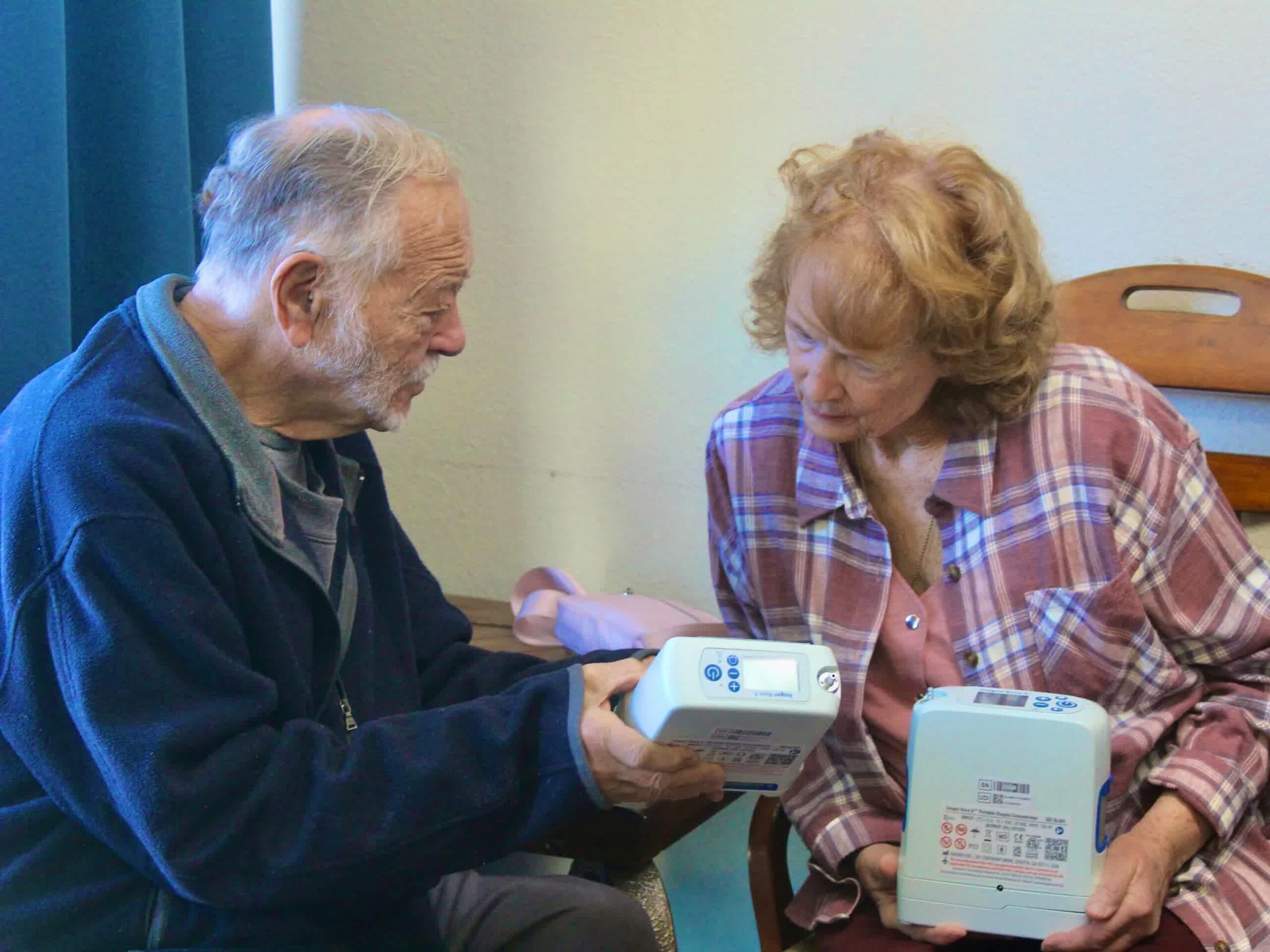
Portable oxygen concentrators (POCs) are lightweight, battery-powered devices designed for mobility. They’re small enough to carry in a shoulder bag or backpack, typically weighing between 4 and 10 pounds. Portable concentrators come in two flow types: pulse dose (delivers oxygen only when you inhale) and continuous flow (delivers a steady stream of oxygen). Your doctor should prescribe which type you need.
Weight
4-10 lbs
Power
Battery + AC
Travel
FAA Approved
Noise
Very Quiet
Things to Consider
• Higher initial cost than home concentrators
• Battery life limits time away from a power source
Considerations:
Higher initial cost than home concentrators, battery life limits time away from a power source.
-
Lightweight (4-10 lbs)
-
Battery-powered for mobility
-
Carry in shoulder bag or backpack
-
FAA-approved for air travel
Not portable (too large and heavy for transport), requires continuous electrical power and are limited to home use only.We provide long oxygen tubing needed to move around your home (we sell tubing up to 50 feet).
-
Higher oxygen output (5L or 10L)
-
Continuous 24/7 operation
-
More affordable than portable units
-
Wheels for easy room-to-room movement
Home Oxygen Concentrators - Best for Home Use
Home oxygen concentrators are designed for reliability and continuous operation. If you spend most of your time at home, need higher oxygen flow rates, or simply want the most straightforward oxygen solution, a home concentrator is an excellent choice. They’re also more affordable than portable units, making them a smart choice for budget-conscious buyers or as a backup to a portable concentrator.
What They Are:
Home oxygen concentrators (also called stationary concentrators) are larger units designed to stay in your home. They typically weigh 30-50 pounds but have wheels so you can move them room to room. They plug into a standard wall outlet and can run continuously, 24 hours a day if needed. Home concentrators provide continuous flow oxygen in 5-liter models (up to 5 liters per minute) or 10-liter models (up to 10 liters per minute). Your doctor should prescribe your required flow rate.
Output
Up to 10 LPM
Power
AC Outlet
Operation
24/7 Ready
Noise
Quiet
Things to Consider
• Not portable (too large and heavy for transport)
• Requires continuous electrical power
Need Help Choosing?
Our oxygen therapy specialists are here to help you find the perfect solution for your needs.
Call Us Today
Speak directly with our oxygen therapy specialists who can answer all your questions.
-
Mon-Th: 9 am-5 pm
Vist Our Shop
Visit our Colorado Springs showroom to see both types in person and try them out.
-
Try before you buy
- Free Consultations
- Expert Guidance
- Local Support
- Family-Owned
Portable vs Home Concentrator FAQs
While most portable concentrators are approved for 24/7 use, it is much more cost effective to use a home or stationary concentrator for overnight use. Portable concentrators never run out of oxygen—they produce it continuously as long as the battery has charge. With tanks, you're constantly monitoring how much oxygen is left and arranging for refills. Concentrators are often lighter than portable oxygen tanks (especially full tanks) and safer—no high-pressure compressed gas. Most importantly, concentrators give you freedom. You can stay out longer without worrying about running out of oxygen. The main requirement is keeping the battery charged, which is as simple as plugging it in at home or in your car. If you're currently using portable oxygen tanks and want to learn about making the switch, call us at 719-471-9895.
Yes, but they serve different purposes. Both types use the same oxygen separation technology—they both filter nitrogen from room air and deliver concentrated oxygen at 90-95% purity. The differences are practical, not quality-related: size and weight (portable units are smaller and lighter), power source (portable units run on batteries; home units plug into the wall), oxygen output (home units typically offer higher maximum flow rates), and cost (portable units are more expensive due to battery technology and miniaturization). If your doctor prescribes a flow rate that a portable concentrator can deliver, then a portable unit will work just as effectively. Many people use both: a home unit for nighttime and home use, and a portable unit for daytime activities. Home continuous flow units are recommended for use with Cpaps or Bipaps.

We hear "oxygen compressor" sometimes! The correct term is "portable oxygen concentrator." An oxygen concentrator concentrates (or purifies) oxygen from regular room air. It doesn't compress air—it separates oxygen from nitrogen using special filters called sieve beds. If you've been searching for a "portable oxygen compressor" or "oxygen machine," you're looking for a portable oxygen concentrator, and we can help! Stop by our showroom or call us at 719-471-9895.
While most portable concentrators are approved for 24/7 use, it is much more cost effective to use a home or stationary concentrator for overnight use. When traveling, you can usually use a portable concentrator at night, but those using a Cpap or bipap will need continuous flow instead of pulse concentrators. The key is to follow your doctor's guidance. If your prescription says you need oxygen while sleeping, ask your doctor specifically about which type of concentrator you need and what flow rate. If you're unsure, we can help you understand your options. Call us at 719-471-9895 or visit our showroom to discuss your specific needs.
Visit Our Colorado Springs Oxygen Concentrator Shop
Ready to breathe easier? We’d love to help. Call us today or visit our storefront in Colorado Springs
Near Fillmore and Nevada, behind the Boonzaaijer’s Dutch Bakery in Colorado Springs